
Singing Proems
The openings of the Iliad and the Odyssey

I have just made a couple of recordings for a friend’s presentation in Australia, and it occurred to me that I should share them here. In particular, it seems a good way to make quality files freely downloadable for him, the participants at his gathering, and anyone else, in case they turn out to be too big for e-mail attachments. (The download buttons are to the right of the audio timeline.) At any rate, here’s a chance to sing and hear Homer without the veils of commentary or English performance. I supply Greek texts if you’d like to follow along, as well as my English crib, for no good reason. (The ϝ sign is called a digamma; it represents a waw [-w-] sound, as you’ll hear.)
In both selections I have chanted the proem (lines 1-7 of the Iliad and 1-10 of the Odyssey) and transitioned slightly to something more thespian and ‘rhapsodic’ in the sequel. The lines from the Iliad culminate with Homer’s first speech, the prayer of Chryses the priest for the return of his daughter, a captive of the Achaean army; she had been gifted to Agamemnon for his pleasure. The dramatic epiphany when Homer delivers a speech in someone’s person never fails to thrill, especially here—for us, the first time. The atmosphere and the ‘vibe’ when chanting a catalogue must have instantly transformed.
The lines from the Odyssey end with the first mention, in the twenty-first line, of the name of the now celebrated man who is announced by the first word (ἄνδρα) of the first line to be the subject of the poem.
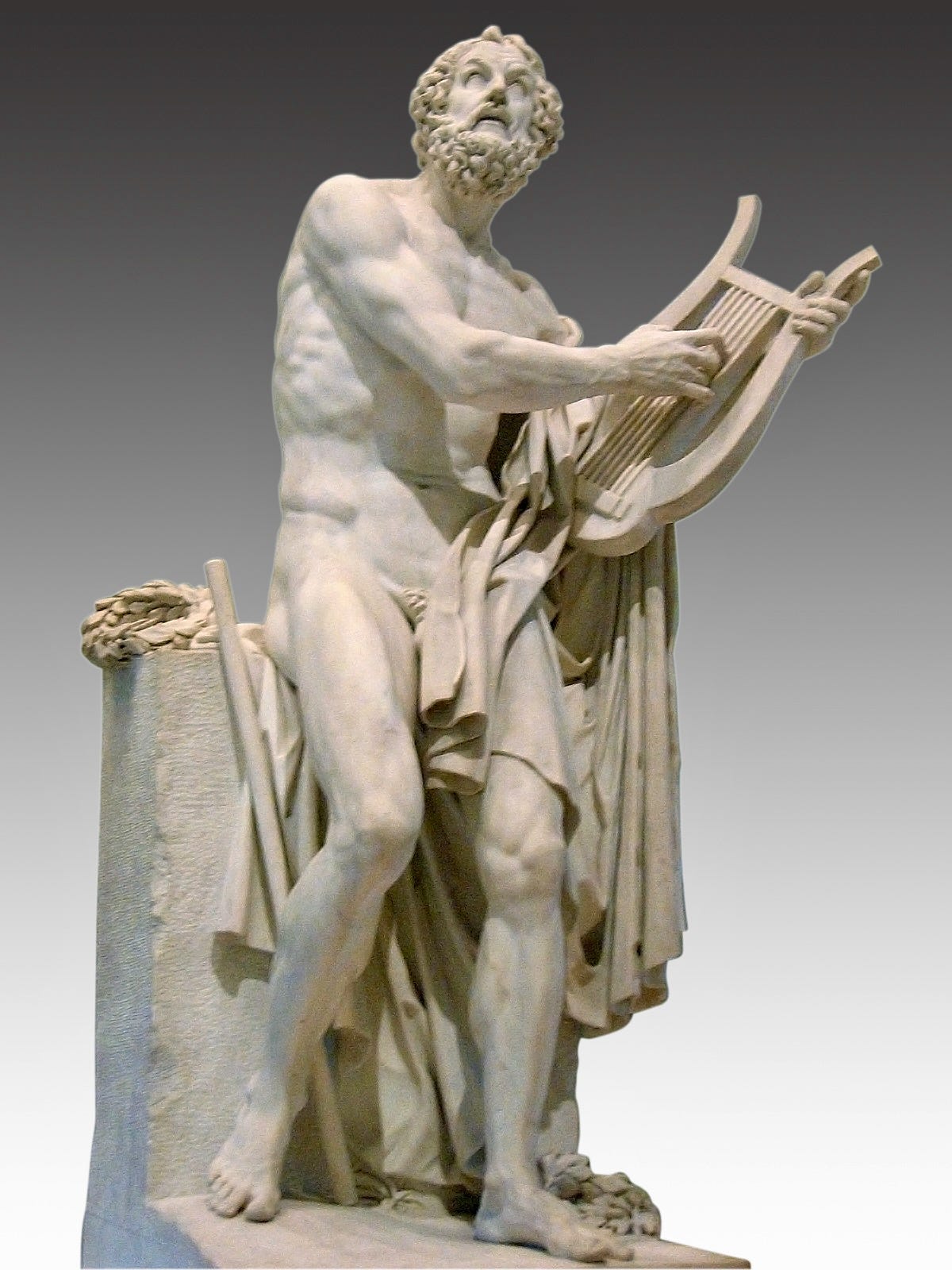
Iliad I.1-21
μῆνιν ἄϝειδε θεὰ Πηληϝιάδεω Ἀχιλῆϝος
οὐλομένην, ἣ μυρί᾽ Ἀχαιοῖς ἄλγε᾽ ἔθηκε,
πολλὰς δ᾽ ἰφθίμους ψυχὰς Ἄϝιδι προΐαψεν
ἡρώων, αὐτοὺς δὲ ἑλώρια τεῦχε κύνεσσιν
οἰωνοῖσί τε δαῖτα, Διὸς δ᾽ ἐτελείετο βουλή,
ἐξ οὗ δὴ τὰ πρῶτα διαστήτην ἐρίσαντε
Ἀτρεϝίδης τε ϝἄναξ ἀνδρῶν καὶ δῖος Ἀχιλλεύς.
τίς τ᾽ ἄρ σφωε θεῶν ἔριδι ξυνέηκε μάχεσθαι;
Λητοῦς καὶ Διὸς υἱός· ὃ γὰρ βασιλῆϝι χολωθεὶς
νοῦσον ἀνὰ στρατὸν ὦρσε κακήν, ὀλέκοντο δὲ λαϝοί,
οὕνεκα τὸν Χρύσην ἠτίμασεν ἀρητῆρα
Ἀτρεϝίδης. ὃ γὰρ ἦλθε θοὰς ἐπὶ νῆϝας Ἀχαιῶν
λυσόμενός τε θύγατρα φέρων τ᾽ ἀπερείσι᾽ ἄποινα,
στέμματ᾽ ἔχων ἐν χερσὶν ἑκηβόλο’ Ἀπόλλωνος
χρυσέῳ ἀνὰ σκήπτρῳ, καὶ λίσσετο πάντας Ἀχαιούς,
Ἀτρεϝίδα δὲ μάλιστα δύω, κοσμήτορε λαϝῶν·
Ἀτρεϝίδαι τε καὶ ἄλλοι ἐϋκνήμιδες Ἀχαιοί,
ὑμῖν μὲν θεοὶ δοῖεν Ὀλύμπια δώματ᾽ ἔχοντες
ἐκπέρσαι Πριάμοιο πόλιν, εὖ δ᾽ ϝοἴκαδ᾽ ἱκέσθαι·
παῖδα δ᾽ ἐμοὶ λύσαιτε φίλην, τὰ δ᾽ ἄποινα δέχεσθαι,
ἁζόμενοι Διὸς υἱὸν ἑκηβόλον Ἀπόλλωνα.
Anger sing thee, Goddess: Peleus’ son Achilles’ wrath,
A towering damned indignance, that set ten thousand griefs upon ‘men of woe,’ Achaeans;
So many and so mighty the souls, jettisoned to the invisible realm—
Ghosts of heroes—they themselves left as takings for jackals,
For ominous birds a dinner—and from Zeus it was coming to fulfilment, his will,
Right from when first they stood apart, paired in strife:
Atreus’ son, a lord among warrior men, and radiant Achilles!
Which god was it who yoked them into strife and combat?
Leto’s son and Zeus’s. For he it was got angry at the king,
And roused an evil sickness up through the army—ah, the people were dying!
Because he dishonoured that Golden One, Chryses, the imprecating priest:
Atreides himself did. For the man came to the swift ships of the Achaeans
Hoping to free his daughter, bringing limitless ransom;
Holding in his hands the fillets of the Far Shooter, Apollo
Perched atop his golden sceptre. Oh he entreats all the Achaeans
But the two Atreidae most of all, the marshals of the hosts:
‘Sons of Atreus, and the rest of you, Men-in-Greaves, Achaeans,
For you, may the gods grant it—they who have Olympian abodes—
That you sack Priam’s city and happily reach home.
But my child, my dear one; won’t you release her? And this ransom—receive it!
Hallowed be the name of the son of Zeus—Far Shooter, Apollo.’
Iliad I.1-21
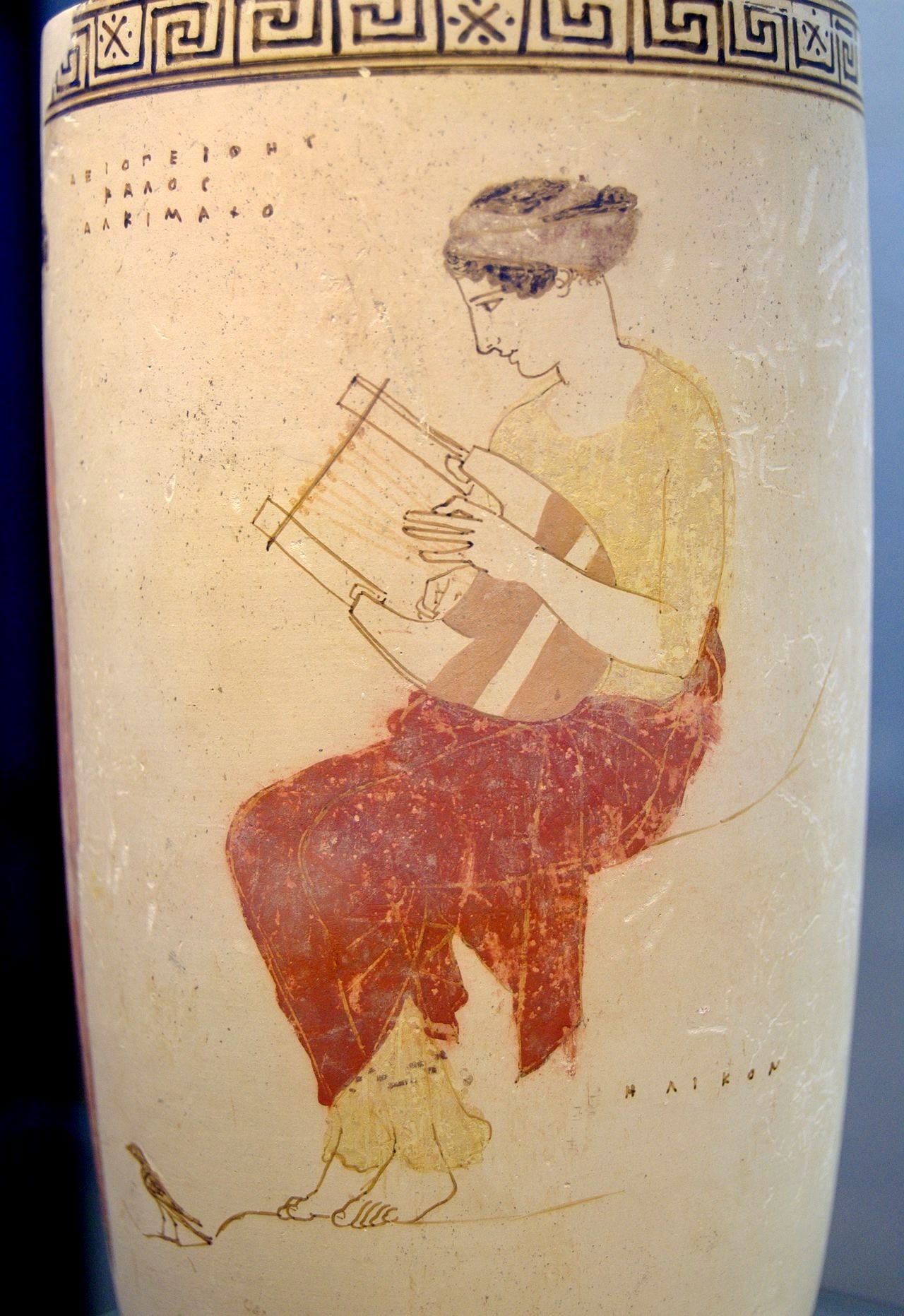
Odyssey 1.1-21
Ἄνδρά μοι ἔννεπε, Μοῦσα, πολύτροπον, ὃς μάλα πολλά
πλάγχθη, ’πεὶ Τροίης ἱερὸν πτολίεθρον ἔπερσεν ·
πολλῶν δ’ ἀνθρώπων ϝἴδε ϝἄστεα καὶ νόϝον ἔγνω,
πολλὰ δ’ ὅ γ’ ἐν πόντωι πάθεν ἄλγεα ὃν κατὰ θυμόν
ἀρνύμενος ἥν τε ψυχὴν καὶ νόστον ἑταίρων.
ἀλλ’ οὐδ’ ὧς ἑτάρους ἐρρύσατο, ἱέμενός περ·
αὐτῶν γὰρ σφετέρηισιν ἀτασθαλίηισιν ὄλοντο,
νήπιοι, οἳ κατὰ βοῦς Ὑπερίονος Ἠϝελίοιο
ἤσθιον· αὐτὰρ ὃ τοῖσιν ἀφείλετο νόστιμον ἦμαρ.
τῶν ἁμόθεν γε, θεά, θύγατερ Διός, ϝεἰπὲ καὶ ἡμῖν.
ἔνθ’ ἄλλοι μὲν πάντες, ὅσοι φύγον αἰπὺν ὄλεθρον,
ϝοἴκοι ἔσαν, πόλεμόν τε πεφευγότες ἠδὲ θάλασσαν ·
τὸν δ’ οἶον, νόστου κεχρημένον ἠδὲ γυναικός,
νύμφη πότνι’ ἔρυκε, Καλυψὼ δῖα θεάων,
ἐν σπέεσι γλαφυροῖσι, λιλαιομένη πόσιν εἶναι.
ἀλλ’ ὅτε δὴ ϝἔτος ἦλθε περιπλομένων ἐνιαυτῶν
τῶι ϝοἱ ἐπεκλώσαντο θεοὶ ϝοἶκόνδε νέεσθαι
εἰς Ἰθάκην, οὐδ’ ἔνθα πεφυγμένος ἦεν ἀέθλων
καὶ μετὰ οἷσι φίλοισι. θεοὶ δ’ ἐλέαιρον ἅπαντες
νόσφι Ποσειδάωνος · ὃ δ’ ἀσπερχὲς μενέαινεν
ἀντιθέωι Ὀδυσῆϝϊ πάρος ἣν γαῖαν ἱκέσθαι.
Versify my man, Muse, with his twists and turns: so many times
Was he made to stray, once he sacked Troy’s sacred city!
So many the peoples whose towns he saw, whose thought he came to know,
And many the times on the sea he suffered griefs, down his life’s breath,
Trying to save his own ghost and the return home of his companions.
But no, he did not protect his crew, as eager as he was;
For by their own outrageous acts were they continually lost,
The fools, who went through the oxen ranks of High-going Helius, the Sun,
Feasting daily away; but it was he who subtracted from them, their day of homecoming.
From amongst these turns, Goddess, daughter of Zeus, pick us a line—even us!
There were all the rest of them, as many as fled steep destruction,
Already at home; escapees from war, not to mention the sea.
It was that man alone, in want of his return home, as well as his woman—the wife—
Whom a bossy nymph was holding back: Calypso, radiant among goddesses,
Within her hollowed caves, desiring him to be her husband.
But when the year arrived, as round and around they come to the point again,
Within which the gods spun for him to make his return home
Into Ithaca, not even there was he escaped from his struggles,
Even among his own near and dear. And all of the gods felt pity
Apart from Poseidon; that one used to rage in a frenzy
Against Odysseus, god’s match, before he reached his motherland.
Odyssey 1.1-21
Hello there, I just signed up to your substack as a founding member. I’m a Homeric rhapsode myself. I have read a few previous articles you wrote on here. I more than agree with you about the comedy of the odyssey, but I have to say it really is apparent when it’s rhapsoded. I recite it similar to you but more musically. The music spontaneously emerges when rigorously correct pronunciation, especially trilling the ρ and using the aspirated breath on the consonants (when applicable) to “push” the vowels. This adds to the syncopation, creating anticipation, escalation and release.
Also saying the vowel’s tone correctly and quickly, similar to your rhythm. However I apply a caesura when I rhapsode it. The caesura allows you to breathe and keeps the meter. Also the rhymes emerge this way as well as the contrast of the masculine sounds with feminine silly, or playful sounds, making it more dynamic. I would add that it must be memorized, like your ABC’s so that you can do it quickly and comfortably. I would love to share with you and compare notes.